

[Q&A series from sake brewery president and chief brewer] What are Junmai, Ginjo, and Daiginjo?
Even if you don't know much about sake, many of you have probably heard of the terms ``Junmai'', ``Ginjo'', and ``Daiginjo''.
However, if someone asks you to explain the meaning and differences between Junmai, Ginjo, and Daiginjo, some people may not be able to give you a clear answer.
For those people, the author, myself, Massu, asked the sake brewer's brewer for an explanation! This time, Mr. Komori of sake brewery toji Mototsuru gave us a first-hand explanation.
As expected of a Japanese sake expert! He explained in an easy-to-understand manner the basic knowledge of ``Junmai,'' ``Ginjo,'' and ``Daiginjo,'' including the conditions and production methods, the differences in taste, and ``What is the rice polishing ratio?''
Please read this article to learn more about Japanese sake before getting drunk on some delicious sake.
Table of contents
- [Q&A series from sake brewery president and chief brewer] What are Junmai, Ginjo, and Daiginjo?
- Toast directly with the sake brewery president and brewer♪ Hands-on local SAKE
- Easy-to-understand explanation of the types of sake
- The difference between Ginjo and Daiginjo
- Explaining ginjo, daiginjo, special junmai, etc. using a table
- Explanation of the taste of Junmai
- Explanation of the taste of Ginjo
- Explanation of the taste of Daiginjo
- Pure rice sake | Seburi Yusui
- Junmai Ginjo | Kiho Tsuru Junmai Ginjo Yamada Nishiki
- Junmai Daiginjo | Kiho Tsuru Junmai Ginjo Yamada Nishiki
Toast directly with the sake brewery president and brewer♪ Hands-on local SAKE

We, who are writing this article, are running an in-home experience-based alcohol mail order service that combines "local alcohol mail order x online toasts with the makers."
It's a so-called online sake brewery tour, and it's a really nice service that allows you to toast with the presidents and brewers of local sake breweries from the comfort of your own home.♪
(→Don't say it yourself! lol)
We want you to experience not only the taste of the alcohol, but also the personality and way of thinking of the sake brewer.
We operate our services with this in mind.
The sake snack menu we will be introducing this time is a real recommendation that we heard directly from the online sake brewery tour.
Easy-to-understand explanation of the types of sake
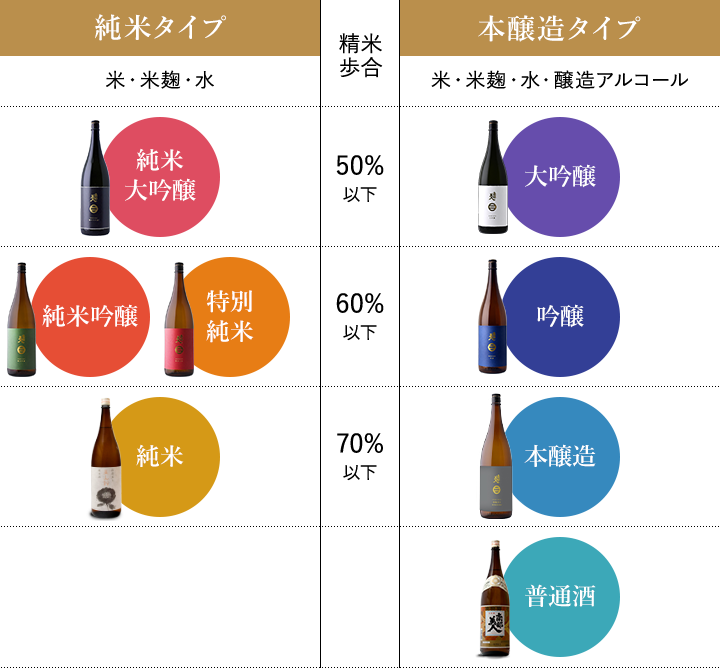
https://www.nanbubijin.co.jp/products/
Even though it is called Japanese sake, the aroma and taste differ depending on the type. The more you know about the types of sake, the more you will be able to improve the way you enjoy alcohol! Therefore, we will explain the types of sake by dividing them into three major types!
Pure rice sake
Junmaishu is an extremely pure sake made from rice and rice koji. Because the ingredients are simple, the original flavor of rice is concentrated. As a result, the richness stands out, and the result is a flavor that allows you to really feel the sweetness and aroma of the rice.
Another feature is that they have a wide variety of unique sake. This is because there are no additives, so the characteristics of the rice used can be easily conveyed.
Honjozo sake
Honjozo-shu is pure rice sake with brewed alcohol added. Brewed alcohol is a distilled alcoholic beverage made from plants such as sugarcane. It is a highly pure alcohol with almost 100% alcohol content, and the alcohol content is adjusted when added to sake. In the case of Honjozo sake, the amount added is determined to be within 10% of the total weight of white rice.
The purpose of adding brewed alcohol is to stabilize quality and change the taste. The flavor is extremely clear, so adding it will not affect the aroma or taste of rice.
Regular sake
Sake is divided into those called ``Specially Named Sake'' and other types. Specified name sake is one whose raw materials and rice polishing ratio are within predetermined ranges, and Junmai sake and Honjozo sake fall under this category. Sake other than specific name sake is called regular sake.
Regular sake comes in a wide variety of varieties and is characterized by its unique taste. Because there are no detailed standards, prices are reasonable. Ordinary sake can be judged by the fact that it does not have ``Junmai'', ``Honjozo'', or ``Ginjo'' on the label.
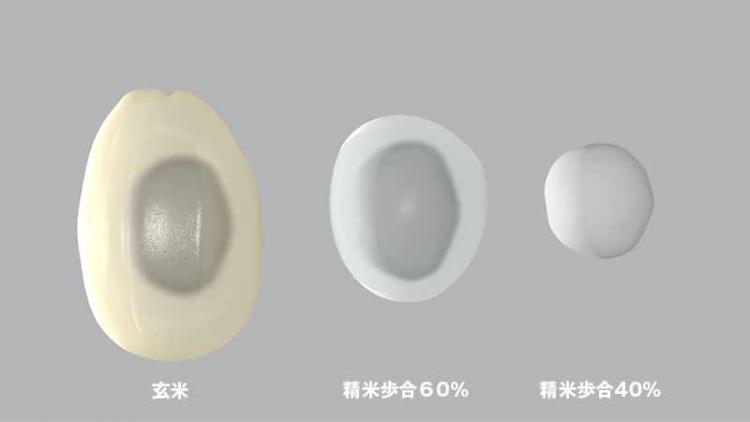
What is rice polishing ratio?
https://www.ienomistyle.com/sakeguide/20180703-509
Sake made by adding brewed alcohol can be broadly divided into Honjozoshu, Ginjoshu, and Futsushu. Among them, those that contain less than 10% brewed alcohol are classified as honjozo-shu and ginjo-shu.
The difference between honjozo sake and ginjo sake is the manufacturing method and rice polishing rate. So, what does rice polishing ratio mean?
So, I would like to explain it in detail!
The difference between Ginjo and Daiginjo
One of the major differences between ginjo sake and honjozo sake is ``ginjozo sake.'' Ginjo is a traditional manufacturing method that produces a highly aromatic taste, also known as ``Ginko.''
The rice used is polished to less than 60% and fermented slowly at low temperatures. This brings out the flavor of the rice. Ginjo brewing requires advanced techniques, and the yeast used is specially made for ginjo brewing.
Both Ginjo sake and Daiginjo sake are made from Ginjo. So, what is the difference between Ginjo and Daiginjo? The difference is the rice polishing rate. The rice polishing ratio for Ginjo is set at 60% or less, and for Daiginjo at 50% or less.
Explaining ginjo, daiginjo, special junmai, etc. using a table
To make it easier to understand the differences between ginjo, daiginjo, special junmai, etc., we have prepared the table below. This was created based on data for 2021 released by the National Tax Agency.
I will explain based on this data.
■Source:Liquor Tax Division, Taxation Department, National Tax Agency “Sake Bookmark (March 2021)”
https://www.nta.go.jp/taxes/sake/shiori-gaikyo/shiori/2021/pdf/058.pdf
|
Specific name |
Raw materials used |
Rice polishing ratio |
Percentage of Koji rice used |
Requirements for flavor etc. |
|
Ginjo sake |
Rice, rice koji, brewed alcohol |
60% or less |
15% or more |
Ginjo brewed, unique flavor, good color |
|
Daiginjo sake |
Rice, rice koji, brewed alcohol |
50% or less |
15% or more |
Ginjo brewing, unique flavor and color are particularly good. |
|
Pure rice sake |
rice, rice koji |
― |
15% or more |
Good flavor and color |
|
Junmai Ginjo sake |
rice, rice koji |
60% or less |
15% or more |
Ginjo brewed, unique flavor, good color |
|
Junmai Daiginjo sake |
rice, rice koji |
50% or less |
15% or more |
Ginjo brewing, unique flavor and color are particularly good. |
|
Special pure rice sake |
rice, rice koji |
60% or less or special manufacturing method (explanation required) |
15% or more |
Particularly good flavor and color |
|
Honjozo sake |
Rice, rice koji, brewed alcohol |
70% or less |
15% or more |
Good flavor and color |
|
Special Honjozo Sake |
Rice, rice koji, brewed alcohol |
60% or less or special manufacturing method (explanation required) |
15% or more |
Particularly good flavor and color |
The ingredients for Ginjo and Daiginjo are exactly the same: rice, rice koji, and brewed alcohol. The rice that is the basis of rice koji is called ``koji rice,'' and the percentage of rice used is fixed at 15% or more for all types.
The rice polishing ratio indicates the degree of polishing (polishing and shaving) of the rice used during the manufacturing process, and is expressed as a numerical value as a percentage of the weight of the rice compared to the original brown rice. The lower the rice polishing ratio value, the more polished the rice is.
The center of rice contains starch, which is said to contribute to the deliciousness of sake. The outer skin of harvested brown rice contains components that give it an off-flavor, so the more the rice is shaved, the more the sweetness of the sake produced from the starch will be brought out.
There is a difference of more than 10% in the rice polishing ratio between ginjo and daiginjo, but because daiginjo takes more time to polish than ginjo, it has a richer ginjo aroma, and the color and clarity of the sake, called ``irozawa,'' are even higher.
On the other hand, Junmai sake also includes Junmai Ginjo sake and Junmai Daiginjo sake. These sakes are made using only rice and rice koji and are brewed using the Ginjo process. Special Junmaishu is a little more complicated. If the junmai sake is made with a rice polishing ratio of 60% or less or a special manufacturing method, an explanation must be written on the label.「special manufacturing methodThere are no clear standards for this sake, so you can enjoy the characteristics of each sake brewery.
Differences in taste such as Junmai, Ginjo, Daiginjo, etc.
https://hanasakebar.com/rice-polishing/
We have looked at the differences between Junmaishu, Ginjoshu, and Daiginjoshu in terms of raw materials and manufacturing methods, but what about the differences in taste?
Let's take a look at these differences.
Explanation of the taste of Junmai
The biggest feature of Junmaishu is that you can really taste the flavor of the rice. It has a mellow aged feel, a sweet aroma that is directly associated with the image of fluffy cooked rice, and a strong flavor. Junmai sake often has a pleasant mouthfeel and a rich flavor.
That said, Junmaishu comes in a variety of varieties, from sweet and deep flavors to dry and refreshing flavors, to firm acidity and a smooth finish, so it's easy to find the flavor you like.
Furthermore, among Junmai sake, Junmai Ginjo and Junmai Daiginjo have a rich richness and fruitiness, allowing you to enjoy a deep flavor.
Explanation of the taste of Ginjo
Ginjo sake is characterized by the fact that it contains ginjo sake and brewed alcohol. Adding an appropriate amount of brewed alcohol to the moromi enhances the aroma and gives it a refreshing taste. Furthermore, sake brewed using Ginjo fermentation is fermented at low temperatures, allowing the aromatic components contained in the mash to dissolve into the alcohol without evaporating, creating a gorgeous, fruity aroma.
Depending on the quality of the sake, you can have a deep, soft fruity aroma, a refreshing fruit wine-like fresh aroma, or a moist mouthfeel.There are various kinds such as refreshing taste.。
Explanation of the taste of Daiginjo
DaiginjoSake uses the same raw materials and manufacturing method as Ginjo, so it basically has a similar aroma and taste to Ginjo, but it has a higher rice polishing rate than Ginjo, which eliminates as many unpleasant flavors as possible, so it brings out the purest quality.
There are many aromas of fruits and flowers, and a clear, noble scent. It has a good balance of sweetness and acidity, and is characterized by a delicate and lovely aftertaste. There are also other changes depending on how you drink it.Cold sake has a light aftertaste,There are many types of hot sake, including ones that have a fluffy sweetness in your mouth.
To enjoy an elegant aroma, it is easier to match dishes that bring out the umami and flavor of the ingredients rather than spicy or strong-flavored dishes.
Introducing a 3-bottle set where you can experience the difference in taste due to the rice polishing ratio "Kimine Tsuru, Kiyama Town, Saga Prefecture"
Now that you know the basics such as the types and differences of Japanese sake, and the rice polishing ratio, let's get to the heart of the matter!
This time, we will be introducing a set of 3 bottles of Japanese sake from Kihotsuru, Kiyama Town, Saga Prefecture, where you can taste and compare the differences in taste due to the rice polishing ratio.。
About Kimine Tsuru, Kiyama Town, Saga Prefecture

Kiyama Town is located in Sakai, a prefecture with Fukuoka Prefecture. The predecessor of Kiyama Shoten was when neighboring landowners started producing sake together. One of Kiyama Shoten's most representative brands, ``Kimine Tsuru,'' was born from a sake brewery that has been in operation since the early Meiji period. The brand is named after the image of a crane that floats leisurely over the mountains of Kiiyama from Kii Castle, and is truly graceful.
Kiyama Shoten is particular about its raw rice. Our pure rice sake, brewed only from the highest quality sake rice, Yamada Nishiki, is luxuriously crafted with a spirit of emphasis on quality that has been passed down from generation to generation. This is proof that we have been brewing sake with a single-minded desire to provide the local people with delicious sake.
Representative brands include ``Kiho Tsuru Junmai Ginjo Yamada Nishiki,'' ``Kiho Tsuru Junmai Daiginjo Yamada Nishiki,'' and ``Junmai Sake Seburi Yusui.''
- Kiyama Shoten LLC
- 151 Miyaura, Kiyama-cho, Miyaki-gun, Saga Prefecture
- TEL: 0942-92-2300
- The homepage ishere
About the Komori sisters

The sake brewery, which was incorporated in 1920 and became the limited liability company Kiyama Shoten, celebrated its 100th anniversary in 2020. Kenichiro Komori, the chief brewer, is in charge of making traditional sake at the sake brewery. The way he takes command at the sake brewery is very serious. The passion he puts into brewing sake is reflected in his honest and dedicated attitude.
Mr. Komori became a brewer in order to adapt to the changing trends of the times. This reflects our belief that the mission of a sake brewery is for managers to listen directly to customer feedback and incorporate it into their products.
Sake is a traditional Japanese culture. The Komori sisters not only protect this, but also strive to evolve it every day, and their eyes are set on the future of sake brewing.
Alcohol introduced this time
The three alcoholic beverages we will be introducing this time are: This is Kiyama Shoten's representative brand.
- Pure rice sake | Seburi spring water (1 go)
- Junmai Ginjo | Kiho Tsuru Junmai Ginjo Yamada Nishiki (Ichigo)
- Junmai Daiginjo | Kiho Tsuru Junmai Daiginjo Yamada Nishiki (one go)

Pure rice sake | Sefuri Yusui
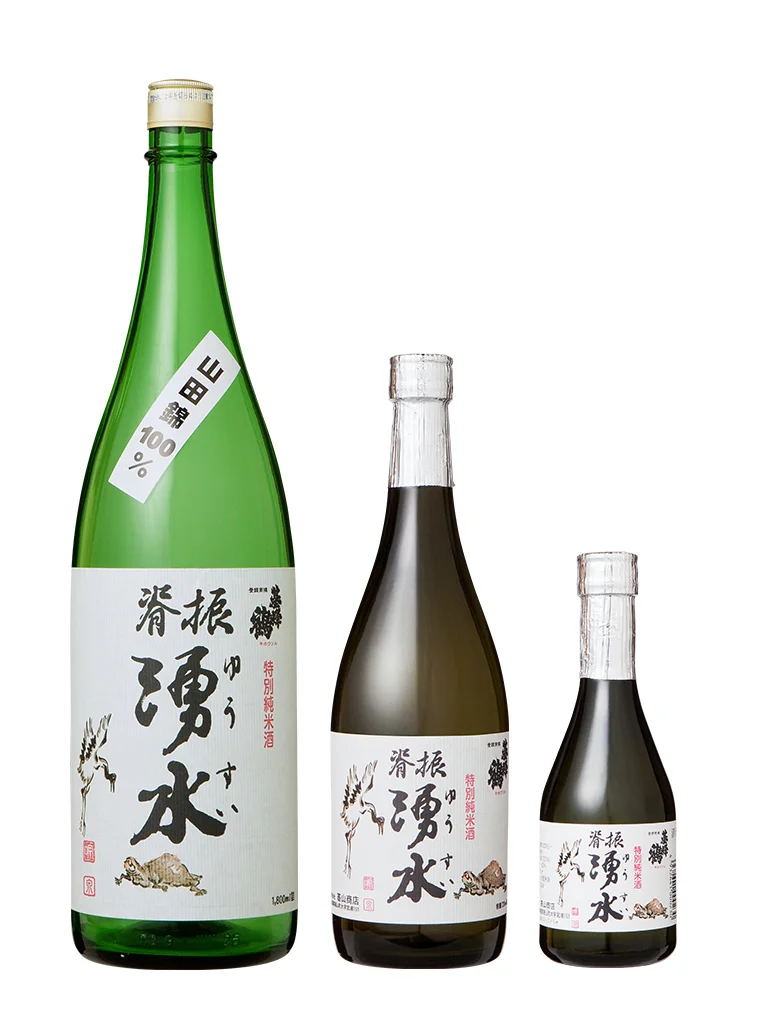
This sake is made with 100% Yamada Nishiki grown by local contracted farmers and is typical of Kiyama Town.
The sweetness and calm aroma of Yamada Nishiki spreads throughout your mouth, and the taste is gentle and sharp.
★ 2019 National Sake Appraisal Association Junmai Sake Category Grand Prix Award Winner
- Alcohol: Sefuri spring water
- Rice used: Yamada Nishiki
- Rice polishing ratio: 60%
- Recommended way to drink: Chilled, room temperature, hot
Junmai Ginjo | Kiho Tsuru Junmai Ginjo Yamada Nishiki

A sake with an impressive refreshing and fruity taste.
We hope you enjoy the silky flavor and the light and clean texture that goes down your throat!
A sake with a good balance of sweetness and subdued acidity that can only be enjoyed by Junmai Ginjo Yamada Nishiki.
★2017 Kura Master Platinum Award
★2020 Kura Master Yamada Nishiki Division Platinum Award Top 2
★2021 Kura Master Junmai Daiginjo Sake Category Gold Award
- Alcohol: Kiho Tsuru Junmai Ginjo Yamada Nishiki
- Rice used: Yamada Nishiki
- Rice polishing ratio: 50%
- Recommended way to drink: Chilled, room temperature, hot
Junmai Daiginjo | Kimine Tsuru Junmai Daiginjo Yamada Nishiki
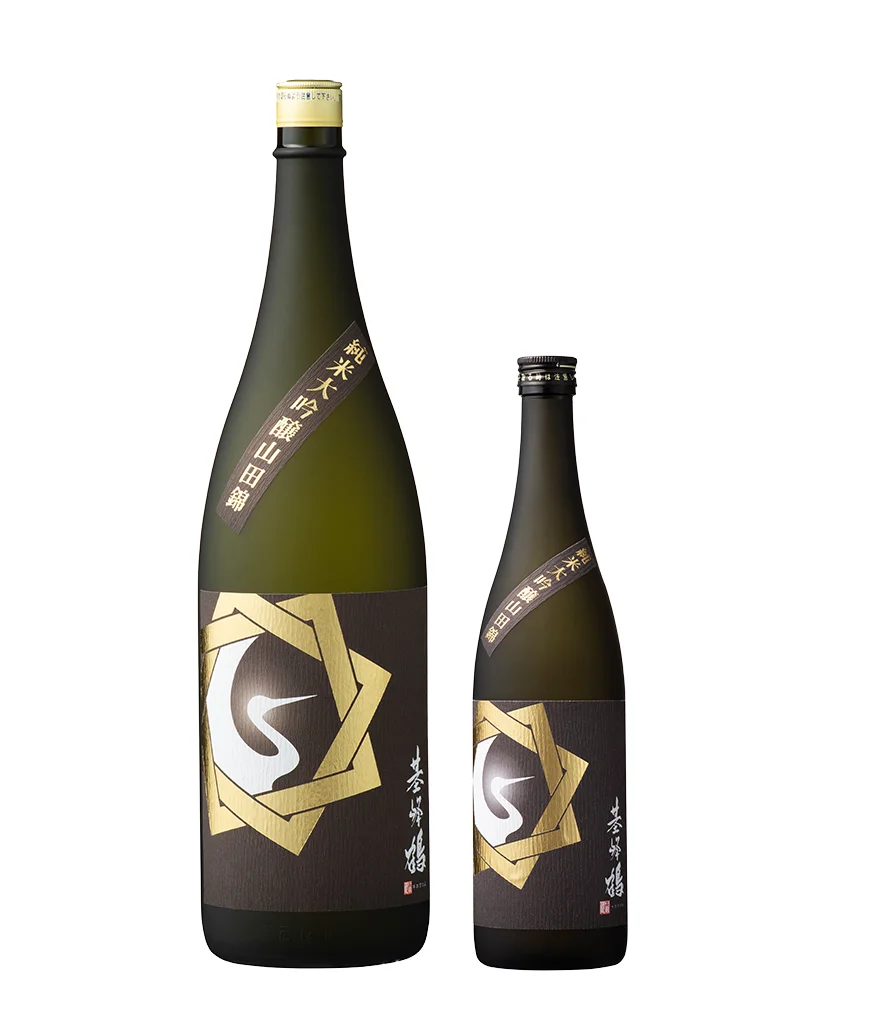
Kiyama Shoten's top quality alcohol!
The rice polishing ratio has been reduced to 35%,A Junmai Daiginjo with a high level of aroma, taste, lingering sound, and sharp aftertaste.
It has a gorgeous and fruity Ginjo aroma, and you can enjoy the gentle and rich flavor.
★2018 Fukuoka Regional Taxation Bureau Appraisal Ginjo Sake Category Grand Prize Award-Winning Sake
- Alcohol: Kiho Tsuru Junmai Daiginjo Yamada Nishiki
- Rice used: Yamada Nishiki
- Rice polishing ratio: 35%
- Recommended way to drink: Chilled, room temperature
What did you think?
When you learn how the taste of sake changes depending on the rice polishing ratio, you realize that alcohol is truly a mysterious world.
Everyone please try it.
We will continue our Q&A series with the sake brewery president and brewer, so please look forward to it.♪
If you want to interact with the brewery president and brewer at home, try Hands-on Local SAKE
Each time we hold an event with a different sake brewery and a different theme related to sake, so if you are interested in the theme of this online sake brewery tour, please check it out below!
Check out this month's online sake brewery tour
In addition, on each SNS, we are distributing sake pairing menus from the sake brewery president and chief brewer, sake Q&A, and the latest information on events, so please follow us.♪
●OfficialInstagram
https://www.instagram.com/
●Official Twitter
https://twitter.com/handsonsake/
●OfficialFacebook
https://www.facebook.com/
●Participants onlyFacebook community page